

“Am I too old to start BJJ?” is one of the most common questions we hear at Brazil 021 Chicago. The short answer: no, it is not too late to start BJJ. Plenty of adults step onto the mat for the first time in their 30s, 40s, 50s and beyond, and Brazilian jiu-jitsu is one of the few martial arts built to reward technique over youth and athleticism.
If you have been thinking about trying jiu-jitsu but feel like you missed your window, this article is for you. We will cover why age matters less than you think, the honest concerns adults have, and what your first months will look like.
Why It Is Not Too Late to Start BJJ as an Adult
Many martial arts reward speed, flexibility and explosive athleticism, qualities that naturally decline with age. Jiu-jitsu is different. It is built on leverage, technique and body mechanics, so a smaller, older or less athletic person can control a larger, stronger, younger partner once they understand the principles.
That is not a sales pitch. It is the founding idea of jiu-jitsu, and you see it play out on mats around the world every day. For adults who feel past their athletic prime, that changes everything.

Health Benefits of Starting Jiu-Jitsu Later in Life
Jiu-jitsu is a workout that is also a skill, which is exactly why adults stick with it. Regular training builds:
- Cardiovascular fitness and muscular endurance
- Balance, coordination and grip strength
- Mobility, as you learn to move on the ground
- Stress relief, because it is hard to think about work while solving a problem on the mat
Because you are always learning something new, it keeps your mind engaged too. Many students say that is what keeps them coming back long after the fitness goals are met.
Common Concerns Adults Have Before Their First Class
“I am not in good enough shape.”
This is the number one concern, and it is backwards. Jiu-jitsu gets you in shape. You do not need to be in shape to start; you need to start to get in shape. Our beginner BJJ classes in Chicago are designed to meet you where you are, and nobody expects a new adult student to show up fit.
“I will get hurt.”
Jiu-jitsu is a contact sport, and like any physical activity it carries some risk. Well-run academies keep beginners safe. At Brazil 021, we teach students to tap early, control intensity during drilling and look after their training partners.
“I will be the oldest or worst person in the room.”
Probably not, and even if you are, nobody minds. Experienced students remember being beginners and genuinely enjoy helping new people. Our culture is about world-class coaching without ego.
“It is too complicated to learn at my age.”
Jiu-jitsu does have a real learning curve. But complicated is not impossible, and adults bring real strengths: they absorb structured instruction well, spot patterns and solve problems logically, all of which matter in jiu-jitsu.
What Your First Months of BJJ Will Look Like
Your first month will feel like a lot. There are new positions, names and sequences, and that is completely normal. Stick with it. With consistent training, positions start to connect, and you begin to understand what your partner is trying to do and how to stop it. Before long, you will be the one helping a brand-new student who is exactly where you started.
Want to know what that first session is like? Read our guide on what to expect at your first BJJ class.
Belts, Age and Competition for Adult Beginners
Adult belts in BJJ go white, blue, purple, brown and black, with stripes along the way. Most adults who start later are not chasing a black belt. They train for fitness, stress relief, self-defense and community, and the belts come as a byproduct of showing up. If you are curious about the first milestone, see how long it takes to get a blue belt in BJJ.
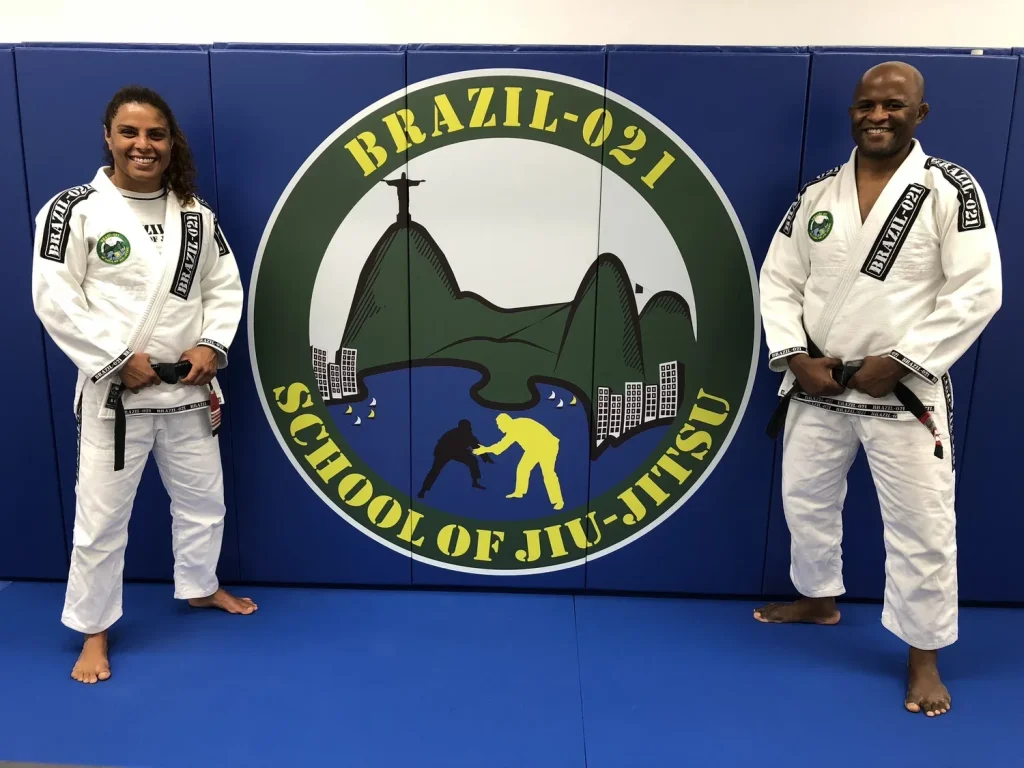
If you ever want to compete, age is not a barrier. The IBJJF runs Masters divisions for adults 30 and older, so you compete against people your own age. Our co-founder, Andre Terencio, won gold at the 2018 IBJJF Boston Open in the black belt Master 3 division and was promoted to 6th-degree black belt in 2026.
How to Start BJJ as an Adult in Chicago
The first step is simple: show up. Your first class is free. Come in, meet our coaches, try a class and see how you feel. Adult beginner classes run early mornings and evenings during the week, so you can fit training around work. See exact times on the BJJ class schedule.
Our academy at 2643 W Chicago Ave, in the Ukrainian Village / West Town area, is easy to reach on the CTA Blue Line and the #66 Chicago Ave and #49 Western Ave buses, which makes it a good option for adults looking for BJJ near Humboldt Park and the surrounding neighborhoods.
FAQ
Is it too late to start BJJ at 40 or 50?
No. Jiu-jitsu rewards technique over athleticism, and you can train at your own pace. Let your coach know about any injuries so they can help you adjust.
How often should a new adult student train?
Two or three classes a week is a comfortable start for most adults. Consistency matters more than intensity.
It is not too late. Book a free trial class and find out what jiu-jitsu feels like as an adult in Chicago.


